

Are You a Candidate for a Glaucoma Consultation?
Glaucoma is one of the leading causes of blindness — and most people don't know they have it until vision is already lost. At Eye Care Specialists, our Milwaukee-area ophthalmologists use the latest diagnostic tools to detect and treat glaucoma early. Don't wait for symptoms that may never come.
.png)
What is Glaucoma?
Glaucoma is a disease that silently damages the optic nerve — the vital link between your eye and your brain. It is usually caused by elevated pressure inside the eye, and it steals your peripheral (side) vision so gradually that most people notice nothing until serious, permanent damage has already occurred.
More than 4 million Americans have glaucoma, and nearly half don't know it. Vision lost to glaucoma cannot be restored. But here's the good news: with early detection and proper treatment, we can stop it in its tracks.
Symptoms of Glaucoma

Tunneling caused by glaucoma can happen so gradually that it is not noticed until permanent sight loss has occurred.
The silence is the warning
With the most common form of glaucoma, there are no pain, no redness, and no blurry vision in the early stages. It progresses so quietly that most patients have no idea anything is wrong — until significant, irreversible damage has occurred.
The only exception is acute angle-closure glaucoma, a rare but serious form that strikes suddenly. Seek emergency care immediately if you experience:
-
Sudden severe eye pain or headache
-
Blurred or hazy vision
-
Halos around lights
-
Eye redness
-
Nausea or vomiting
For everyone else, the most important thing you can do is get regular eye exams — especially if you have any of the risk factors above.
Types of Glaucoma
Primary Open-Angle Glaucoma (POAG)
This is the most common form of the disease, accounting for the vast majority (up to 90 percent) of cases. POAG normally occurs in both eyes and progresses so slowly that it often goes unnoticed for months or years—thus earning it the title "Sneak Thief of Sight." With open-angle glaucoma, the filtration (drainage) angle of the eye between the cornea and iris (colored part) remains wide open, but some blockage occurs in the "trabecular meshwork" (the tiny sieve-like drainage canals through which eye fluid passes into the bloodstream). This backup creates increased intraocular (inner eye) pressure and gradual deterioration of the optic nerve. Primary open-angle glaucoma is a lifelong condition that, at present, can only be controlled, not cured.
Acute Angle-Closure Glaucoma
This is a much rarer but extremely serious form of glaucoma. In most of these patients, the filtration angle of the eye is unusually narrow. Thus, if something triggers the pupil to dilate too far in an affected eye, the iris balloons forward and adheres to the cornea—completely blocking the drainage of fluid at the outflow angle. This causes a rapid and extreme rise in pressure, which can lead to irreversible loss of vision without prompt medical and laser treatment by an ophthalmologist.
In contrast to open-angle glaucoma, acute angle-closure glaucoma has symptoms. It strikes suddenly (usually in one eye) and can cause severe eye pain or headaches above or around the eye, blurry vision, redness, and sometimes nausea and vomiting. An attack of acute angle-closure glaucoma is a medical emergency, and you should not wait to see whether or not it gets better on its own. The sooner this condition is diagnosed and treated, the greater the chance of reversing the episode.
Individuals at risk for acute angle-closure glaucoma can only be identified by examination. Antihistamines and antidepressants should be used with extreme caution in people who are susceptible to acute angle-closure glaucoma.
Are you at risk?
Because glaucoma rarely causes symptoms in its early stages, knowing your risk factors is critical. You may be at higher risk if you have:
-
A family history of glaucoma — Siblings and children of patients have a 5–10 times greater risk and should be screened every 1–2 years
-
Age 35 or older — Risk increases steadily with age; about 8% of people over 70 are affected
-
Diabetes — Diabetics have three times the risk of developing glaucoma
-
African American, Latino, or Asian heritage — These groups face significantly higher risk, often developing the disease at a younger age
-
Nearsightedness — Requires glasses to see at a distance
-
Prior eye injury or surgery
-
Long-term steroid medication use — Including eye drops, inhalers, or oral steroids

How we Detect and Monitor Glaucoma

At Eye Care Specialists, we use a comprehensive set of diagnostic tools to catch glaucoma early — often before you experience any vision changes at all.
Optical Coherence Tomography (OCT) Eye Care Specialists was one of the first practices in Wisconsin to offer OCT laser scanning technology. This advanced, painless test creates a detailed image of your optic nerve and retinal nerve fibers, allowing us to detect the earliest signs of glaucoma — even before damage would show up on a standard visual field test. As you return for follow-up exams, any changes are tracked and compared with precision over time.
Our other diagnostic tools include:
-
Tonometry — Measures the pressure inside your eye
-
Ophthalmoscopy — Examines the health and appearance of your optic nerve
-
Visual Field Testing — Maps your peripheral vision to detect any areas of loss
-
Gonioscopy — Evaluates the drainage angle to determine the type of glaucoma and best course of treatment
Treatment Options
Glaucoma cannot be cured, but it can be effectively controlled. Our goal is always to lower eye pressure and protect your remaining vision. Depending on the type and severity of your glaucoma, your doctor may recommend one or more of the following:
Prescription Eye Drops
For many patients, one or two medicated eye drops per day is all that's needed to control eye pressure and halt the progression of the disease. Several classes of drops are available, and your doctor will find the right fit for your eyes and lifestyle.
Laser Treatment
When drops alone aren't sufficient — or if you'd prefer to reduce your dependence on daily medication — outpatient laser treatment is an excellent option. Eye Care Specialists offers SLT (Selective Laser Trabeculoplasty), which improves the eye's natural drainage, and ECP (Endoscopic Cyclophotocoagulation), which reduces fluid production. Both procedures take under 10 minutes and are covered by Medicare and most insurance plans.
Minimally Invasive Glaucoma Surgery (MIGS)
The last decade has brought remarkable advances in surgical options for glaucoma. For patients with mild to moderate glaucoma who need more than drops or laser can offer, MIGS procedures provide a safer, highly effective alternative to traditional surgery. Our surgeons are experienced with the latest FDA-approved MIGS devices, which work with your eye's natural drainage system to lower pressure with fewer risks and a faster recovery than conventional glaucoma surgery.
Traditional Glaucoma Surgery
For advanced cases where other treatments haven't provided adequate control, traditional surgical procedures create a new drainage pathway for fluid to exit the eye. These are the most effective options for significantly lowering eye pressure and are recommended when preserving vision requires more aggressive intervention. Your doctor will walk you through the benefits, risks, and what to expect.
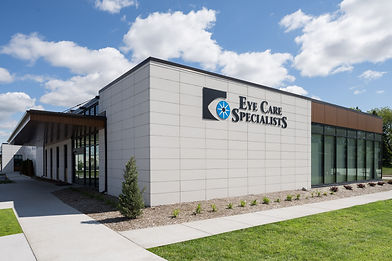
Protect Your Vision. Early Detection Makes All the Difference.
Since 1985, Eye Care Specialists has provided comprehensive medical, surgical, and laser eye care to more than 200,000 patients across the Milwaukee area. Our three convenient locations — Downtown Milwaukee, West Allis, and Wauwatosa — are staffed by fellowship-trained ophthalmologists dedicated to protecting your sight for life.
Glaucoma is manageable. Blindness from glaucoma is largely preventable. The single most important step you can take is scheduling a comprehensive eye exam.